
Weishuo, Ningbo Weishuo Molding and Plastic Products Co., Ltd., specializes in precision mold solutions for demanding plastic manufacturing applications. A Precision Injection Mold for Small High-Cavity Remote Control Housings helps manufacturers produce consistent, attractive, and accurately fitting electronic enclosures while supporting efficient high-volume production. By combining balanced cavity design, optimized hot runner systems, precision machining, and reliable ejection mechanisms, manufacturers can improve dimensional consistency, surface quality, and assembly performance.
Small remote control housings may appear simple, but their production involves several interconnected engineering challenges. Thin walls, narrow button openings, snap-fit structures, decorative surfaces, and multiple cavities all require careful mold design. An effective precision injection mold must distribute molten plastic evenly, control shrinkage, maintain dimensional accuracy, and release finished parts without deformation.
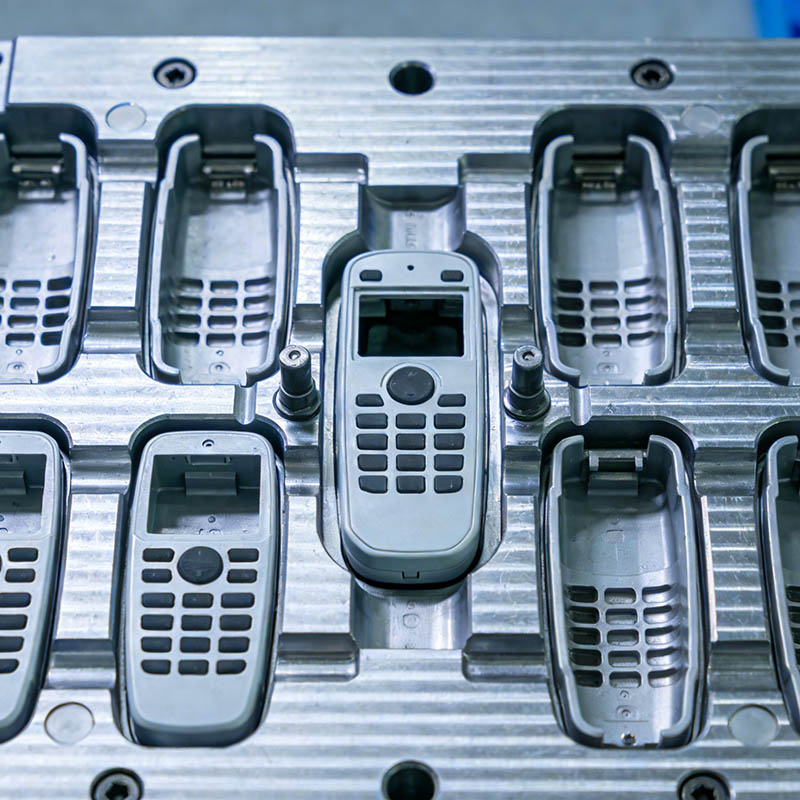
A high-cavity injection mold is a tooling system designed to produce multiple plastic parts during a single injection cycle. For remote control housings, this approach can increase output per cycle, reduce the molding cost allocated to each component, and support large production orders.
A typical remote control assembly may contain an upper housing, a lower housing, a battery cover, button supports, and other internal components. Depending on the product design, production requirements, and component geometry, manufacturers may develop dedicated molds for individual parts or evaluate multi-cavity configurations that suit their production strategy.
The main objective of a Precision Injection Mold for Small High-Cavity Remote Control Housings is not simply to maximize cavity count. It is to achieve a practical balance between output, dimensional consistency, cycle time, tooling investment, and maintenance requirements.
For example, adding more cavities can increase theoretical output, but only when the runner system, cooling layout, venting, and ejection mechanisms operate consistently across the mold. An unbalanced design may produce different part weights, incomplete filling, or dimensional variation between cavities.
For manufacturers supplying consumer electronics, appliance controls, and industrial remote control devices, successful mold engineering begins with the relationship between part geometry and production targets.
Small plastic enclosures require careful control because relatively minor molding defects can affect both appearance and assembly. A housing may look acceptable at first glance but still fail during button installation, screw fastening, or final product assembly.
Remote control housings often include screw bosses, locating pins, snap-fit clips, battery compartments, and narrow mating edges. These features must remain within agreed dimensional tolerances to support consistent assembly.
Engineers need to account for material shrinkage, mold temperature, packing pressure, and cooling differences when determining cavity dimensions. Tolerance requirements should be based on the function of each feature rather than applying the same tolerance to every surface.
In a high-cavity mold, every cavity should receive an appropriate volume of molten plastic under comparable processing conditions. Differences in runner length, gate geometry, flow resistance, or temperature can create cavity-to-cavity variation.
A balanced runner layout and appropriate gate positioning help reduce these differences. Mold flow analysis can also identify potential filling problems before tooling is completed.
Remote control housings are visible consumer-facing components. Flow marks, weld lines, sink marks, flash, scratches, and uneven texture can affect perceived product quality.
Surface requirements should be established early. Glossy surfaces, matte textures, fine grain patterns, and decorative finishes may require different cavity machining and polishing strategies.
Thin-wall sections and uneven wall thickness can lead to differential shrinkage. If a housing is ejected before it has sufficient dimensional stability, it may bend or develop stress-related defects.
Uniform wall thickness, effective cooling, suitable draft angles, and well-positioned ejector components help reduce these risks.
A reliable precision mold integrates multiple design features into one coordinated system. The most important elements depend on the housing geometry, resin selection, cosmetic expectations, and expected production volume.
The cavity and core determine the external and internal geometry of the molded component. CNC machining, electrical discharge machining (EDM), and appropriate finishing methods can produce complex details such as narrow grooves, screw bosses, button openings, and snap-fit features.
Critical dimensions should be identified during design review. These may include the housing perimeter, mating surfaces, button-hole positions, mounting features, and battery-cover interfaces. Inspection plans can then focus on dimensions that directly affect assembly and product function.
Hot runner systems can help reduce cold runner waste and support efficient material delivery in suitable multi-cavity applications. However, performance depends on the resin, cavity layout, gate type, temperature control, and maintenance strategy.
For small electronic housings, gate locations should be selected to balance filling efficiency with cosmetic requirements. Poorly positioned gates may create visible marks or encourage weld lines in sensitive areas.
Where appropriate, sequential valve gating can provide additional control over melt delivery. Its suitability should be evaluated against part geometry, production volume, and tooling cost.
Cooling influences cycle time, shrinkage, warpage, and dimensional stability. A well-designed cooling layout helps remove heat more uniformly from different regions of the molded component.
Cooling channels should be planned around wall thickness, bosses, ribs, and other features that may retain heat. Simulation and trial molding can help identify areas that require further optimization.
Small housings may contain deep ribs, recessed details, or delicate clips that complicate part release. Properly positioned ejector pins, sleeves, lifters, or sliders can support reliable demolding where the geometry requires them.
Effective venting is equally important. Trapped air can cause incomplete filling or burn marks, particularly near the ends of flow paths. Venting must be designed carefully to release air without creating unacceptable flash.
Material selection directly affects housing strength, impact resistance, dimensional stability, surface appearance, and processing behavior. The appropriate resin depends on the product's operating environment and performance requirements.
These materials are not interchangeable without engineering review. Each resin has its own shrinkage behavior, melt-processing window, moisture sensitivity, and surface characteristics. Glass-fiber reinforcement, flame-retardant additives, or colorants may further influence mold design and processing.
Manufacturers should also define the required finish before machining begins. Mirror polishing, textured surfaces, and etched patterns can change the tooling process and the release behavior of the molded part.
For further background on remote control enclosure design, review this custom remote control plastic housing reference and evaluate the material and finishing options against your own product specifications.
Choosing a mold configuration requires evaluating more than the number of cavities. The following table summarizes common design considerations for a precision remote control housing project.
| Design Factor | Primary Purpose | Potential Benefit | Key Evaluation Point |
|---|---|---|---|
| Cavity configuration | Determine parts produced per cycle | Higher output when the process is balanced | Production demand, press capacity, and tooling budget |
| Runner and gate layout | Distribute molten plastic | More consistent cavity filling | Pressure loss, gate marks, and cavity balance |
| Cooling channels | Control heat removal | Improved dimensional stability and cycle efficiency | Temperature uniformity and cooling time |
| Cavity surface finish | Achieve the specified appearance | More consistent gloss or texture | Cosmetic standards and release performance |
| Ejection mechanism | Release molded components | Fewer ejection-related defects | Part geometry, draft, and ejector positioning |
| Precision inspection | Verify critical tooling dimensions | Improved dimensional control | Measurement methods and documented tolerances |
| Preventive maintenance | Maintain tooling condition | More predictable long-term production | Wear points, cleaning intervals, and spare parts |
The best configuration is the one that meets the customer's quality and delivery targets at a sustainable total cost. A lower initial mold price may not represent the best long-term value if the design creates excessive scrap, difficult maintenance, or unstable production.
A structured development process reduces uncertainty and helps manufacturers identify problems before full-scale production. For a high-cavity remote control housing project, the following stages are particularly important.
Early collaboration between the mold designer, injection molding team, and product engineer is especially valuable. Changes to a snap-fit, gate location, or wall thickness may be inexpensive during design but costly after the mold has been completed.
Quality control should verify both the tooling itself and the plastic components produced from it. A precision mold is only commercially successful when it can repeatedly manufacture parts that meet the agreed specifications.
Coordinate measuring machines (CMMs), optical measurement systems, gauges, and surface inspection tools may be selected according to the feature being checked. Measurement methods should match the drawing requirements and the level of accuracy needed.
For high-volume programs, a documented validation plan can include first-article inspection, dimensional reports, agreed sample approval criteria, and ongoing process monitoring. Acceptance standards should be established jointly by the customer and supplier before mass production begins.
Supplier selection has a direct impact on tooling development, production stability, and long-term operating costs. Buyers should assess engineering capability alongside price and delivery commitments.
Before placing an order, consider the following questions:
Weishuo's mold manufacturing portfolio includes precision mold solutions and hot runner precision control systems. Buyers evaluating a Precision Injection Mold for Small High-Cavity Remote Control Housings can discuss cavity layout, surface requirements, material selection, and production objectives with the engineering team before finalizing the tooling specification.
Explore Weishuo's core advantage mold solutions to learn more about its mold engineering capabilities, manufacturing approach, and quality assurance practices.
A high-cavity mold can produce multiple components in one injection cycle, increasing potential output and reducing the molding cost per part. Actual savings depend on cavity count, cycle time, material consumption, scrap rate, machine utilization, and maintenance costs.
ABS is a common option for general-purpose electronic enclosures. PC/ABS, PC, and PP may also be suitable for specific applications. Final selection should consider impact resistance, heat exposure, surface appearance, dimensional stability, and the resin's processing requirements.
They can improve runner balance, optimize gate locations, design uniform cooling channels, provide effective venting, and validate the molding process through systematic trials. Comparing samples from individual cavities helps identify localized problems before they affect an entire production run.
Hot runner systems can reduce cold runner waste and support controlled material delivery in suitable mold designs. Their effectiveness depends on the resin, gate arrangement, temperature control, cavity configuration, and required surface quality. They should be evaluated against the full tooling and operating budget.
Useful information includes 2D drawings, 3D CAD files, material specifications, target cavity count, estimated annual volume, dimensional tolerances, surface finish requirements, available injection machine specifications, and expected delivery milestones. Sharing these details helps the supplier develop a more accurate technical proposal.
Request trial samples, dimensional inspection reports, appearance assessments, and assembly verification. For multi-cavity tooling, ask for cavity-by-cavity comparisons and evidence that the process can maintain consistent output over repeated cycles.
Modification feasibility depends on the nature of the design change, the available steel in the relevant mold area, the cooling and runner layout, and the extent of the tooling revision. Buyers should establish a clear engineering change process and review the cost and schedule impact before approving modifications.
A high-cavity remote control housing mold is a production investment that must balance precision, appearance, cycle efficiency, and long-term reliability. Careful cavity layout, optimized material delivery, effective cooling, reliable ejection, and structured quality validation all contribute to consistent molded components. The right tooling strategy begins with a clear understanding of product requirements and continues through trial molding, process optimization, and preventive maintenance.
Weishuo supports mold projects with an engineering-focused approach to precision tooling and high-efficiency production. If you are developing a new remote control enclosure or upgrading an existing manufacturing process, contact us to discuss your drawings, material requirements, target output, and quality expectations. Our team can help evaluate a suitable mold configuration and develop a solution aligned with your product specifications and production goals.