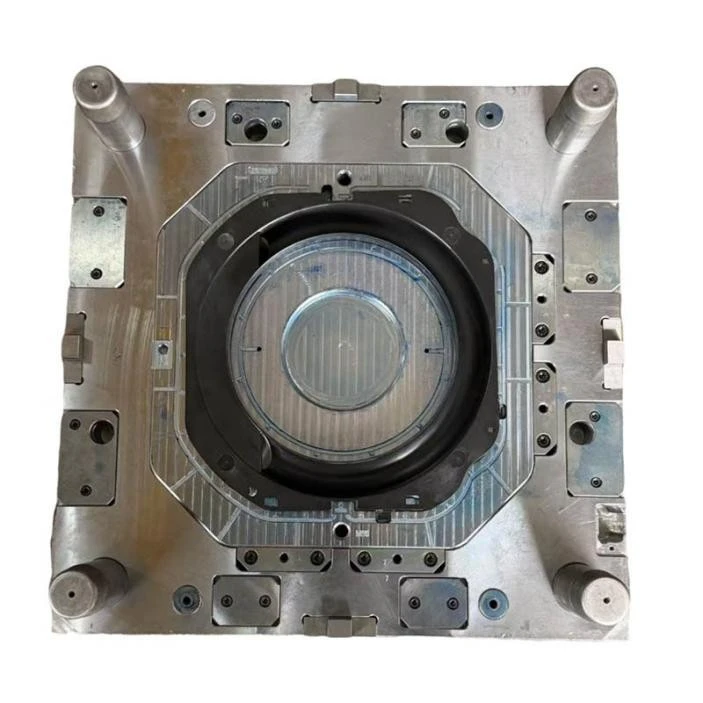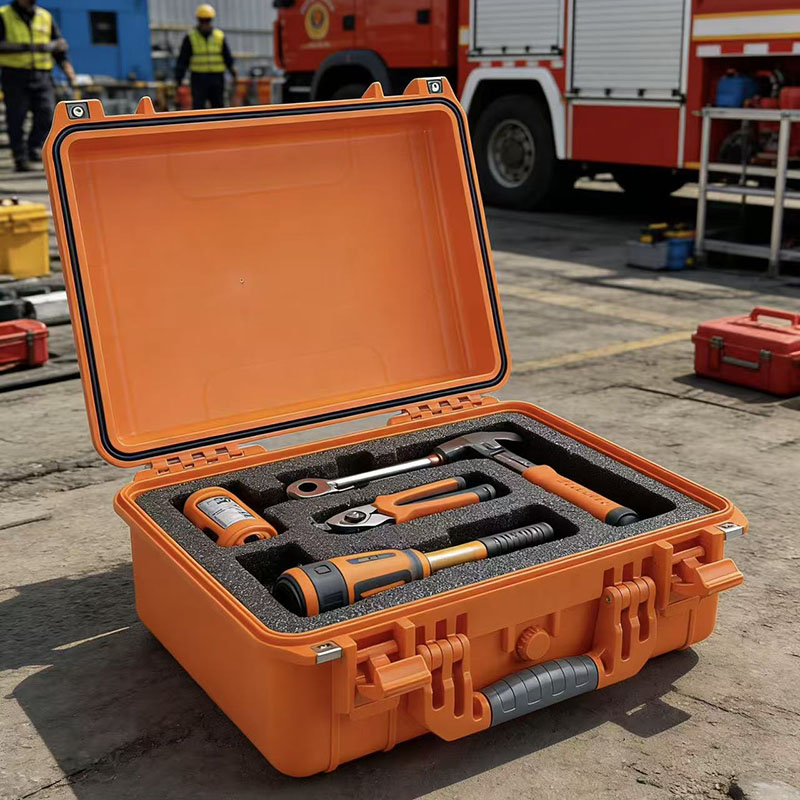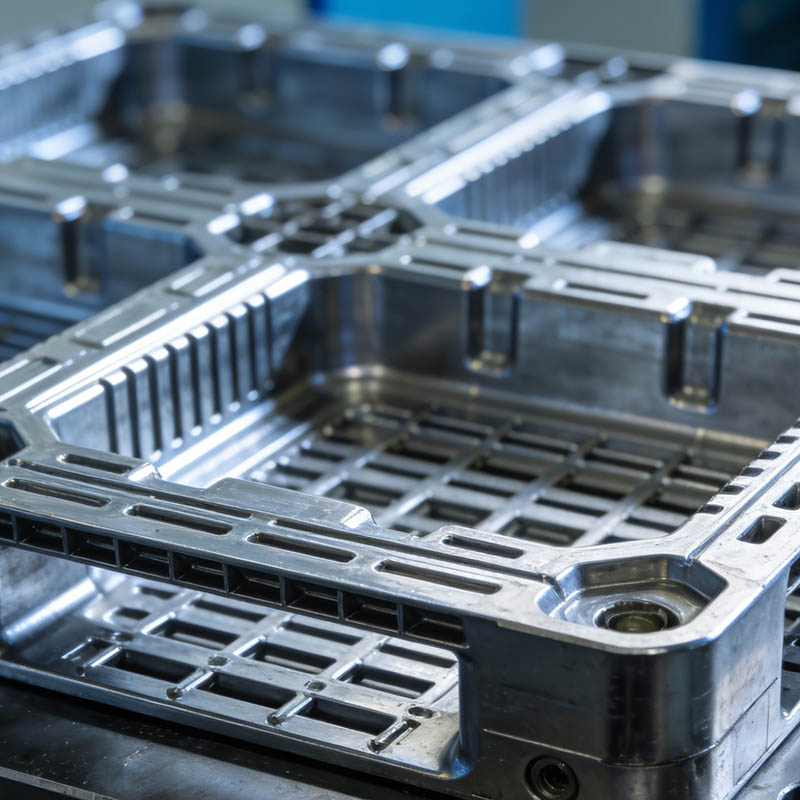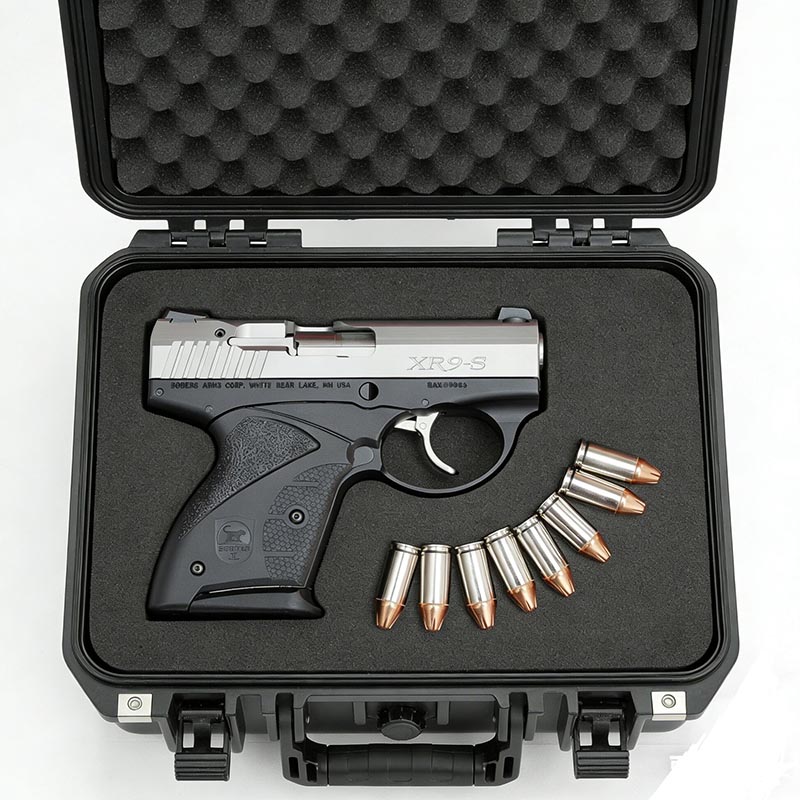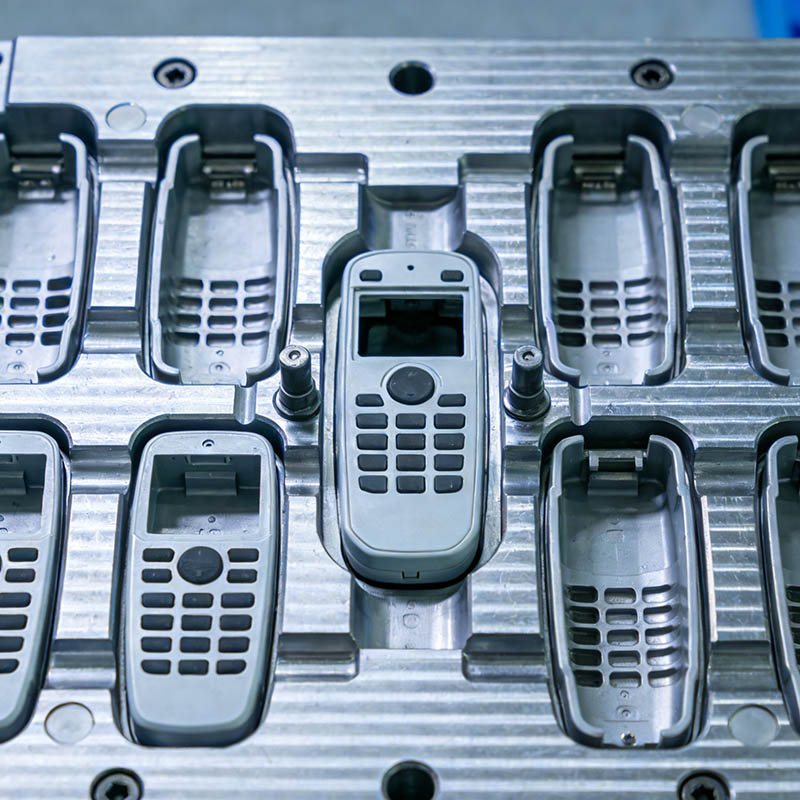

Weishuo, Ningbo Weishuo Molding and Plastic Products Co., Ltd., provides Logistics turnover boxes and pallet molds designed for demanding warehousing, material handling, and transportation applications. By combining robust mold structures, efficient cooling systems, and precision manufacturing, these solutions help manufacturers produce durable plastic containers with consistent dimensions, reliable load-bearing performance, and improved production efficiency.
Logistics turnover boxes and plastic pallets are essential components of modern supply chains. Their durability, dimensional accuracy, and stacking performance depend significantly on the quality of the injection molds used to manufacture them. This article explores how structural engineering, HDPE and PP material selection, cooling channel design, precision machining, and automated production integration influence mold performance. It also explains how manufacturers can evaluate mold suppliers, reduce production risks, and select tooling suited to long-term industrial use. With integrated mold development and manufacturing capabilities, Weishuo supports customized solutions for logistics container production, helping businesses pursue consistent product quality and more efficient manufacturing operations.

Reusable plastic containers and pallets help businesses organize goods, simplify transportation, and improve warehouse utilization. They are widely used in manufacturing plants, distribution centers, retail supply chains, and industrial storage facilities. Unlike disposable packaging, these products must withstand repeated handling, stacking, loading, unloading, and transportation.
The performance of a finished container depends not only on the selected plastic resin but also on the mold that shapes it. Poor mold design may cause uneven wall thickness, warpage, dimensional inconsistency, surface defects, or difficult demolding. These problems can affect product strength, stacking stability, and compatibility with automated handling equipment.
Well-engineered molds help manufacturers achieve repeatable production while managing material consumption, cycle time, and maintenance requirements. For large-volume operations, improvements in these areas can influence the total cost of ownership over the mold's service life.
Key benefits of properly engineered logistics molds include:
Large logistics containers and pallets often require substantial mold bases, carefully designed cavities, and reliable support structures. Their size and geometry create engineering challenges that differ from those of smaller injection-molded components.
A rigid mold base helps maintain alignment during repeated injection cycles. This is especially important for large components, where uneven loading or insufficient support can contribute to dimensional variation and accelerated wear. Appropriate mold steel, guide systems, and support arrangements help maintain stable operation.
Cavity geometry determines the external dimensions and surface characteristics of the molded product, while the core forms its internal features. Accurate machining and suitable draft angles help achieve consistent dimensions and facilitate part release.
Ribs, corner supports, and load-distribution features can improve the structural performance of a plastic pallet or turnover box without relying entirely on thicker walls. Their geometry must balance stiffness, material usage, cooling requirements, and moldability.
Large molded parts may be difficult to release because of deep cavities, broad contact surfaces, or complex structural features. Properly positioned ejector systems help remove products without unnecessary deformation, surface damage, or production interruptions.
Weishuo's logistics mold solutions emphasize robust structural design and precision manufacturing. The appropriate configuration should be determined by the container dimensions, intended load, resin characteristics, and expected production volume.
Material selection affects impact resistance, stiffness, chemical compatibility, temperature performance, and the behavior of plastic during injection molding. High-density polyethylene (HDPE) and polypropylene (PP) are commonly considered for reusable logistics containers and pallets, although the best choice depends on the intended operating conditions.
HDPE is frequently used for industrial containers because suitable grades can provide good toughness, moisture resistance, and impact performance. It may be appropriate for applications involving repeated handling, depending on the resin grade, design, and service environment.
PP is valued for its relatively low density, chemical resistance, and versatility in injection molding. Depending on the formulation, it can support lightweight container designs and complex molded features. Impact-modified grades may be considered when additional toughness is required.
Neither material guarantees a particular load capacity or service life. Actual performance depends on resin specifications, recycled content, wall thickness, rib geometry, molding conditions, and environmental exposure.
When developing a mold, buyers should confirm:
For additional information about industrial mold capabilities, visit Weishuo's industrial mold solutions page.
Cooling is one of the most important factors affecting injection molding cycle time and dimensional stability. Molten plastic must cool sufficiently before the molded component can be ejected without excessive deformation. Large containers and pallets can present uneven cooling conditions because their walls, ribs, corners, and reinforced sections do not all release heat at the same rate.
An effective cooling system distributes cooling channels according to the mold geometry and the thermal requirements of the product. Proper channel placement can help reduce temperature differences across the cavity, improve dimensional consistency, and support shorter, more predictable cycles.
Reducing cycle time is valuable only when the finished product continues to meet quality requirements. Cooling optimization should therefore be evaluated together with resin behavior, packing pressure, mold temperature, ejection timing, and the actual geometry of the container.
Modern warehouses increasingly rely on conveyor systems, automated storage and retrieval systems, robotic grippers, and standardized material-handling equipment. Plastic containers and pallets must fit these systems reliably to avoid interruptions caused by inconsistent dimensions or unstable stacking.
Precision mold engineering can help manufacturers control critical interfaces such as pallet feet, stacking rims, locating features, container edges, and conveyor contact surfaces. Repeatable production is particularly important when thousands of identical units circulate through a distribution network.
Automation-oriented mold development should consider:
Precision machining, suitable mold construction, and systematic inspection provide a foundation for repeatable output. However, automated-system compatibility should always be confirmed through dimensional reviews and, when necessary, physical testing with the customer's equipment.
Choosing a logistics mold supplier involves more than comparing the initial quotation. Buyers should assess the engineering scope, mold construction, cooling design, inspection process, production targets, and technical support available throughout the mold's service life.
| Evaluation Factor | What to Check | Why It Matters |
|---|---|---|
| Mold structure | Base rigidity, cavity layout, guide systems, and support design | Helps maintain alignment and dimensional stability |
| Mold material | Steel grade, hardness, wear resistance, and surface treatment | Influences durability and maintenance requirements |
| Cooling system | Channel layout, water flow, and temperature distribution | Affects cycle time and warpage control |
| Dimensional precision | Critical tolerances, measurement methods, and inspection records | Supports consistent product fit and stacking performance |
| Production capacity | Target output, machine compatibility, and validated cycle time | Helps align tooling with manufacturing demand |
| Quality validation | Trial reports, sample approval, and defect acceptance criteria | Reduces the risk of unresolved production issues |
| Technical service | Design support, troubleshooting, spare parts, and maintenance guidance | Supports long-term production continuity |
For a more accurate quotation, provide the supplier with product drawings, 3D files, resin specifications, target production volume, critical tolerances, and any existing equipment restrictions. A clear technical brief makes it easier to compare proposals on equivalent requirements rather than price alone.
Logistics containers and pallets serve a wide range of industries. Their design requirements vary according to the products being handled, the transportation environment, and the storage system.
Not every container is suitable for every environment. Food-contact applications may require specific resin documentation and regulatory compliance, while cold-storage or outdoor applications may need additional material and impact testing. Buyers should define these conditions before finalizing mold design.
A structured development process helps align product requirements with mold design, manufacturing, and final production performance. Although project details differ, the following stages provide a useful framework for industrial container tooling.
Weishuo's published mold service information describes support covering design optimization, mold manufacturing, trial runs, and mass-production preparation. For individual projects, buyers should confirm the exact deliverables, inspection documentation, acceptance criteria, and service scope before placing an order.
Learn more about Weishuo's capabilities through its company profile and core mold solutions.
These injection molds manufacture reusable plastic containers and pallets used in warehousing, transportation, manufacturing, and distribution. They shape the product's dimensions, structural features, stacking interfaces, and other functional details.
HDPE and PP are common options. HDPE may be selected for toughness and impact performance, while PP can offer a useful balance of stiffness, low weight, and processing versatility. The final choice should be based on the required load, temperature, chemical exposure, and applicable standards.
Mold structure, cavity precision, cooling balance, gating, and ejection all influence the finished product. Appropriate engineering helps control warpage, dimensional variation, surface defects, and structural consistency.
Yes. Mold designs can be developed around specified dimensions, stacking features, wall and rib geometry, resin requirements, and production targets. Buyers should provide technical drawings or 3D models and confirm the required specifications with the mold manufacturer.
Review the supplier's engineering capabilities, machining equipment, mold inspection methods, trial-molding process, quality documentation, and after-sales support. Requesting sample approval and agreeing on measurable acceptance criteria can help reduce procurement risks.
Large plastic parts can cool unevenly because their walls and reinforced sections have different thermal characteristics. A well-designed cooling system helps manage temperature distribution, cycle time, shrinkage, and warpage, subject to validation during mold trials.
Prepare the product drawing or 3D model, dimensions, material grade, expected annual output, machine specifications, critical tolerances, and special performance requirements. These details help the supplier assess tooling complexity and propose an appropriate solution.
Reliable logistics turnover boxes and pallets begin with careful mold engineering. Structural rigidity, accurate cavity machining, efficient cooling, dependable ejection, and consistent quality inspection all contribute to the performance of the finished product. By evaluating these factors alongside material selection, production volume, and maintenance requirements, manufacturers can make better-informed tooling decisions and support more dependable logistics operations.
Weishuo provides mold development and manufacturing solutions for industrial logistics containers, with an emphasis on structural design, production efficiency, and dimensional consistency. Whether you are developing a new turnover box, optimizing a plastic pallet, or planning a high-volume manufacturing project, explore Weishuo's logistics turnover boxes and pallet molds and contact us to discuss your drawings, material requirements, production targets, and customization needs.