
Article Summary: An omnidirectional buffering and shock-absorbing hard box helps protect sensitive equipment against impact, vibration, and handling-related damage during transportation and storage. Ningbo Weishuo Molding and Plastic Products Co., Ltd. combines protective hard-shell construction with multi-layer cushioning technology to create solutions for precision instruments, laboratory equipment, medical devices, and other fragile assets. Understanding cushioning materials, internal fit, environmental protection, and case dimensions can help buyers select a suitable protective enclosure for their operational requirements.
1. Why Does Sensitive Equipment Need Advanced Protection?
2. How Does Omnidirectional Buffering Work?
3. What Are the Key Features of a Shock-Absorbing Hard Box?
4. What Technical Specifications Should Buyers Evaluate?
5. Which Industries Benefit from This Protective Solution?
6. How Do You Choose the Right Case Size?
7. What Should You Check Before Purchasing?
Modern instruments and electronic devices often contain delicate optical components, calibrated sensors, precision assemblies, or sensitive electronic circuits. Even when equipment performs reliably in a controlled environment, transportation introduces different risks, including sudden impacts, repeated vibration, accidental drops, and pressure from surrounding cargo.
A conventional storage box may prevent scratches and provide basic physical separation, but it may not adequately manage the energy generated by an impact. If an instrument moves freely inside its enclosure, the resulting collision can damage components even when the exterior shell remains intact.
An omnidirectional buffering and shock-absorbing hard box addresses this challenge through a combination of a rigid outer structure and an internal cushioning system. The enclosure helps resist external contact, while appropriately designed cushioning reduces shock transmission and limits unwanted movement.
For businesses transporting high-value equipment, this protection can support:
The appropriate solution depends on the equipment's weight, fragility, transportation conditions, and environmental exposure. Protection should therefore be evaluated as a complete system rather than as a feature of the outer shell alone.
Omnidirectional protection focuses on reducing the effects of impacts arriving from different directions. During transportation, a case may experience movement from its base, sides, corners, or lid. A cushioning design that addresses only one contact surface can leave other areas vulnerable.
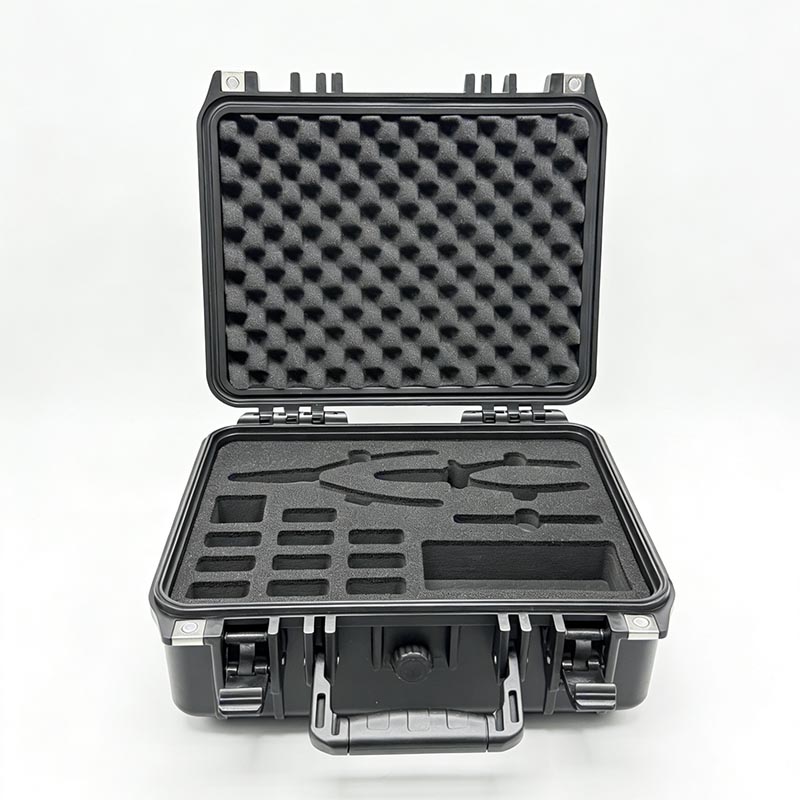
Weishuo's protective concept combines multi-layer cushioning structures with shock-absorbing foam materials to create a more comprehensive protective environment around sensitive equipment.
The outer shell acts as the first line of defense against external contact, handling pressure, and accidental knocks. A suitable hard-shell structure also helps maintain the enclosure's shape and protects the equipment from direct contact with surrounding objects.
Internal cushioning absorbs and redistributes part of the energy generated by an impact. Different foam layers or cushioning materials can be selected according to the equipment's mass, geometry, and sensitivity. The objective is to reduce the force transmitted to the protected item without allowing excessive movement inside the case.
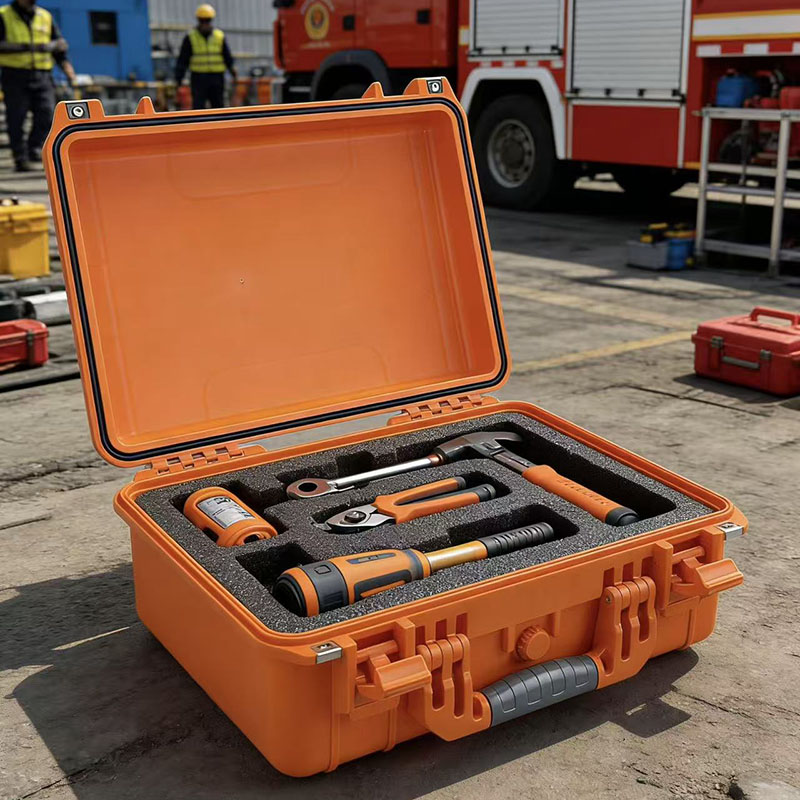
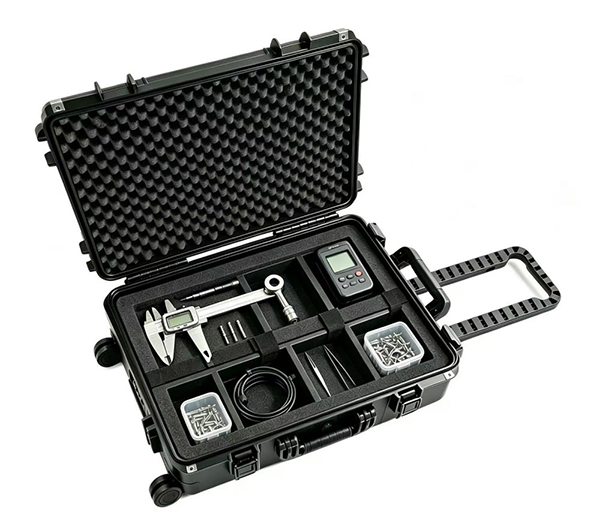
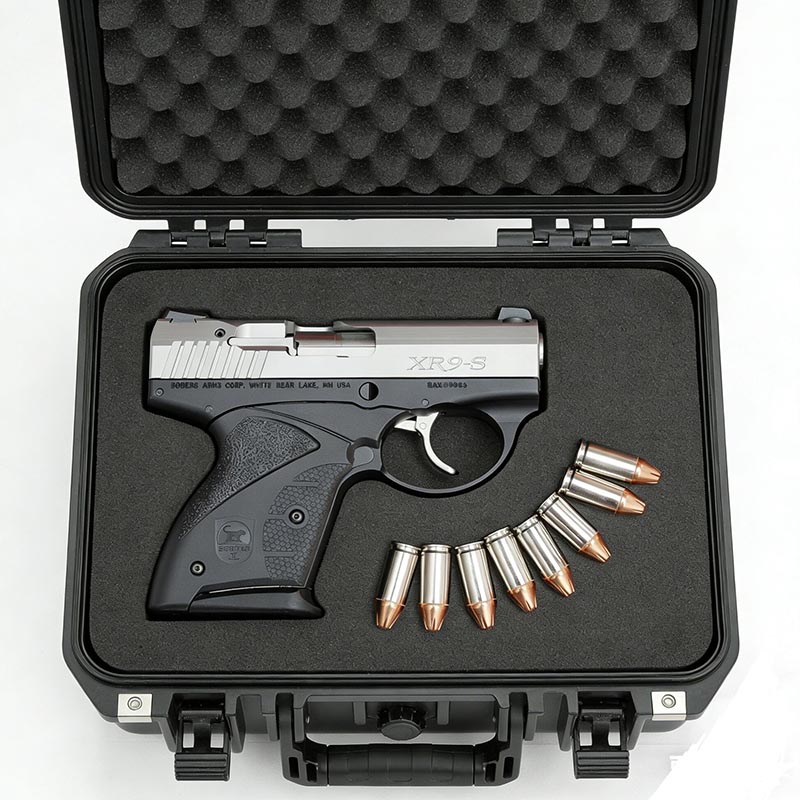
A properly fitted interior keeps the instrument in its intended position. Custom-shaped foam inserts can accommodate irregular surfaces, connectors, cables, probes, and detachable accessories. This reduces the possibility of internal collisions during movement.
Where the specified configuration includes suitable sealing components and verified environmental protection, the case can also help limit exposure to dust and water. Weishuo's product information identifies IP67 protection for the featured solution. Buyers should confirm the applicable model, configuration, and test documentation before relying on this rating in a specific application.
When comparing an omnidirectional buffering and shock-absorbing hard box with a conventional equipment case, buyers should examine how its construction addresses real operating risks.
A six-sided cushioning arrangement helps protect the equipment from impacts arriving through the base, lid, sides, and corners. Effective protection requires attention to vulnerable protrusions and contact points rather than simply surrounding the item with a uniform layer of foam.
Weishuo identifies a composite cushioning material system involving shape-memory polymer and high-damping elastomer. These material categories can contribute to energy management and recovery characteristics. Their actual performance depends on material formulation, thickness, temperature, and loading conditions.
Road transport, warehouse handling, and industrial logistics expose equipment to repeated vibration. A suitable cushioning system can reduce the vibration transmitted to the payload when its design is matched to the equipment's weight and the relevant vibration frequencies.
A hard-shell case provides a defined external boundary for storage and transportation. Buyers should also inspect the closure system, hinges, handles, sealing components, and internal supports because these elements influence the overall usability and reliability of the enclosure.
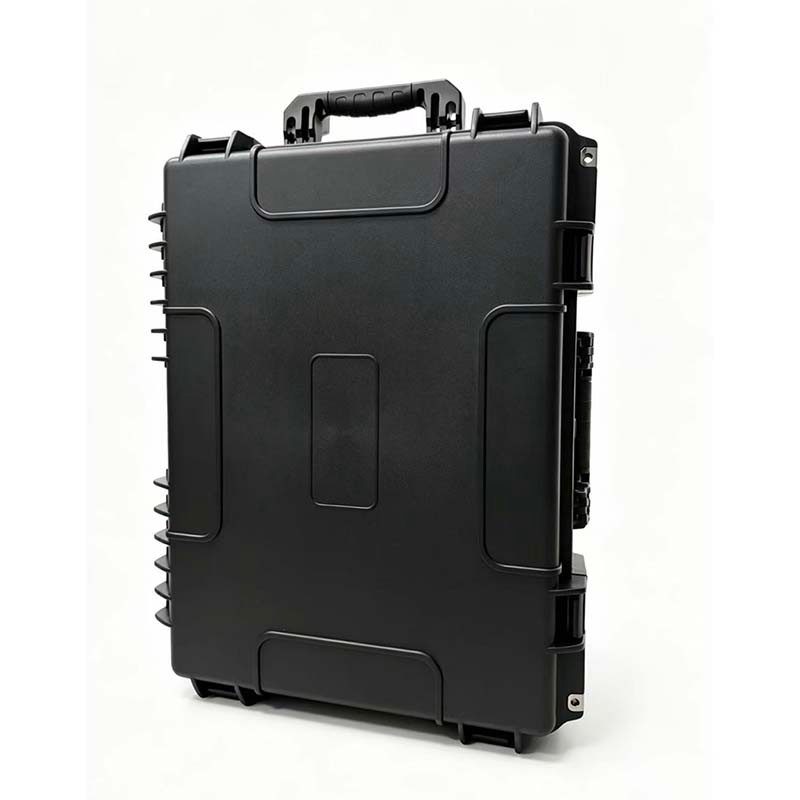
Different equipment requires different internal dimensions and carrying arrangements. Weishuo offers handheld and pull-rod hard case formats, giving buyers options for compact instruments and larger equipment sets. Additional customization requirements should be confirmed with the manufacturer.
Technical specifications help purchasers determine whether a protective case is appropriate for a particular application. The following figures are published for Weishuo's featured product and should be treated as product-specific reference information, subject to confirmation of the selected model and test conditions.
| Specification | Published Reference | Why It Matters |
|---|---|---|
| Drop protection | 1.5 m drop-height reference | Provides a starting point for evaluating accidental-drop protection. |
| Vibration transmission | Below 8% at 5–500 Hz, as stated on the product page | Helps buyers assess vibration-isolation performance; the test method and measurement definition should be confirmed. |
| Cushioning material | Composite foam system incorporating shape-memory polymer and high-damping elastomer | Supports the design of an internal shock-management system. |
| Environmental protection | IP67 listed for the featured solution | Relevant to dust and water exposure when the complete configuration meets the applicable test requirements. |
| Operating temperature | -20°C to +80°C, as published | Helps determine suitability for the intended operating environment. |
| Internal configuration | Model-dependent | Must accommodate equipment dimensions, mass, accessories, and clearance requirements. |
These figures are not a substitute for application-specific verification. In particular, vibration transmission depends on the measurement method, test fixture, frequency range, and payload. Similarly, an IP67 rating should not be interpreted as proof of shock resistance or suitability for every water-exposure scenario.
Before approving a purchase, request the relevant test reports, dimensional drawings, material information, and confirmation that the selected configuration meets your operating requirements.
An omnidirectional protective enclosure is useful wherever equipment must remain secure while moving between manufacturing facilities, laboratories, healthcare environments, field locations, or storage areas.
Laser interferometers, precision scales, coordinate measuring equipment, and other inspection instruments may require stable positioning and protection against mechanical disturbance. Custom internal cushioning can help keep the instrument and its accessories organized during transportation.
Spectrometers, chromatographs, and selected microscopy equipment may contain sensitive optical or mechanical assemblies. A properly engineered case helps manage transportation risks when equipment is moved between laboratories, service centers, or research facilities.
Portable ultrasound equipment, patient monitors, and other mobile medical devices can benefit from structured storage and impact management. Buyers should evaluate cleaning requirements, accessory organization, equipment-specific handling instructions, and any applicable regulatory requirements before selecting a case.
Laser equipment, optical assemblies, communication instruments, and sensitive electronic systems can be vulnerable to shocks affecting alignment, connectors, and internal components. A well-fitted protective enclosure helps reduce unnecessary movement during transit.
Selected research samples, geological specimens, ceramics, and cultural objects may require carefully controlled support during handling. Cushioning must be chosen according to the item's fragility, surface characteristics, mass, and environmental sensitivity.
For all these applications, the case should be designed around the protected item and its transport conditions. A general-purpose enclosure may not be sufficient for equipment with unusually high sensitivity or specialized handling requirements.
Correct sizing is essential for effective shock absorption. An oversized case may allow the payload to move, while an undersized case can create pressure points or prevent the lid from closing properly. Buyers should compare both external dimensions and usable internal dimensions before selecting a model.
The following table lists representative handheld and pull-rod models from Weishuo's published product range.
| Model | External Dimensions (mm) | Internal Dimensions (mm) | Format |
|---|---|---|---|
| WS5011-8 | 210 × 171 × 90 | 190 × 125 × 78 | Handheld |
| WS5001-9 | 230 × 191 × 104 | 210 × 145 × 92 | Handheld |
| WS5002-10 | 266 × 240.5 × 129.5 | 243 × 185 × 116 | Handheld |
| WS5004-13 | 334 × 293.5 × 151 | 307 × 234 × 137 | Handheld |
| WS5006-18 | 462 × 356 × 192 | 434 × 292 × 176 | Handheld |
| WS6001 | 559 × 358 × 233 | 519 × 295 × 191 | Pull-rod |
| WS6002 | 797 × 505 × 319 | 734.5 × 440 × 274 | Pull-rod |
Note: Dimensions are listed as length × width × height in millimeters. Confirm the manufacturer's dimensional conventions and usable clearance before ordering.
Use the following steps to shortlist a suitable case:
For irregularly shaped instruments or multi-component kits, a custom foam layout can be more useful than choosing a case based on external dimensions alone.
Selecting an industrial protective case involves more than comparing prices. A structured evaluation helps buyers balance protection, usability, durability, and procurement requirements.
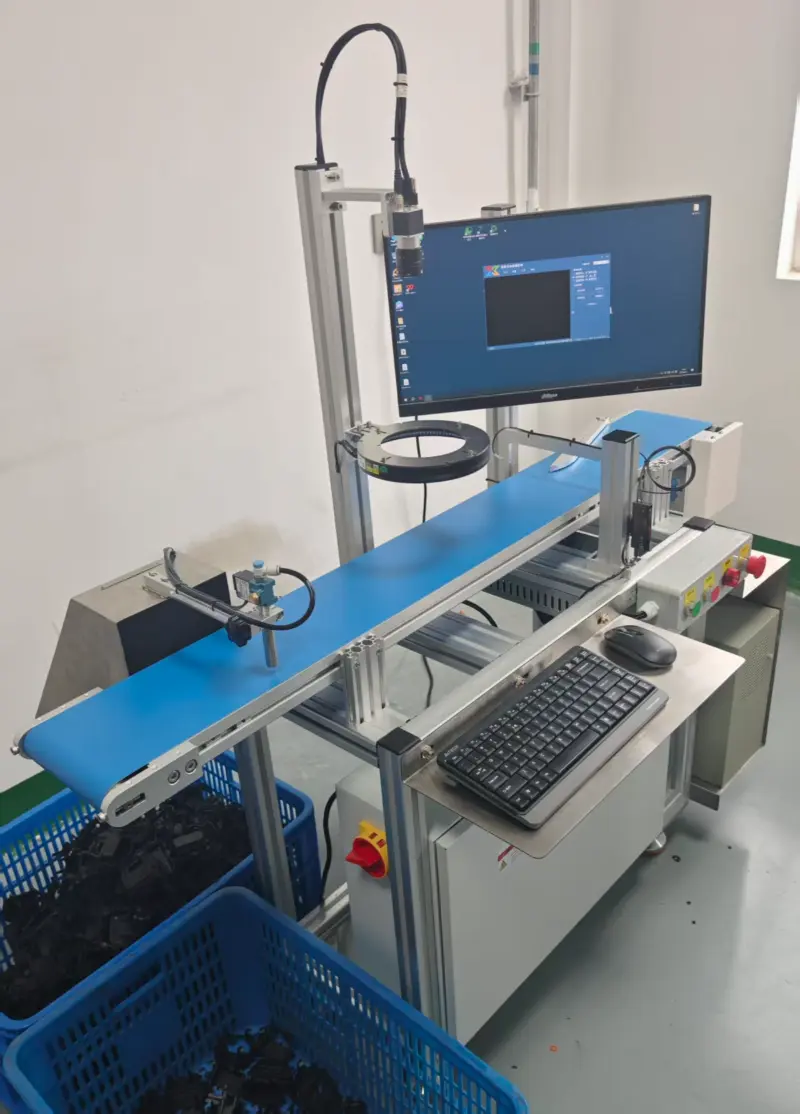
Working directly with a manufacturer can simplify communication between the equipment owner, packaging designer, and production team. Ningbo Weishuo Molding and Plastic Products Co., Ltd. integrates mold development and injection molding with protective case manufacturing, supporting discussions about dimensions, internal cushioning, and product configuration.
Buyers can also review the manufacturer's broader industrial hard case and equipment protection range to compare available enclosure formats and related solutions.
It is a rigid protective enclosure designed to reduce the effects of impacts and vibration from multiple directions. It combines an outer shell with internal cushioning that helps absorb energy and keep the protected equipment in position.
Yes, provided the enclosure and cushioning are selected for the instrument's dimensions, mass, fragility, and transport conditions. Precision measuring tools, laboratory instruments, and optical equipment are potential applications. Sensitive instruments may require additional qualification testing.
No. IP67 addresses protection against dust ingress and water immersion under specified test conditions. It does not independently establish impact resistance, vibration isolation, or drop performance. These properties require separate evaluation.
Custom foam inserts can be designed to accommodate different equipment shapes, accessories, and positioning requirements. Confirm the available material choices, insert design, and customization scope with Weishuo before placing an order.
It indicates a published drop-protection reference for the featured product. Actual protection depends on the test setup, drop orientation, payload, and acceptance criteria. Buyers should request the applicable test documentation before using this figure as a procurement requirement.
A handheld case may suit compact equipment and frequent short-distance carrying. A pull-rod case can be more convenient for larger or heavier equipment that needs to move between locations. The best option depends on payload weight, case dimensions, mobility needs, and the available handling space.
Provide equipment dimensions, total payload weight, photographs or drawings, cushioning preferences, expected transport conditions, environmental protection requirements, target order quantity, and any required testing standards. These details help the manufacturer assess the appropriate case configuration.
An omnidirectional buffering and shock-absorbing hard box is a practical option for businesses that need to reduce transportation-related risks to valuable and sensitive equipment. Its effectiveness depends on the combined performance of the outer shell, cushioning materials, internal fit, closure system, and environmental protection features. Careful specification and application-specific verification are essential to achieving dependable results.
With experience in mold development, injection molding, and protective enclosure manufacturing, Weishuo supports buyers seeking hard cases for precision instruments, laboratory equipment, medical devices, and other demanding applications. Whether you need a standard case or a customized cushioning solution, explore the omnidirectional buffering and shock-absorbing hard box and contact us to discuss your equipment dimensions, protection requirements, customization options, and quotation. A well-matched protective case can help your team transport equipment with greater confidence and manage handling risks more effectively.