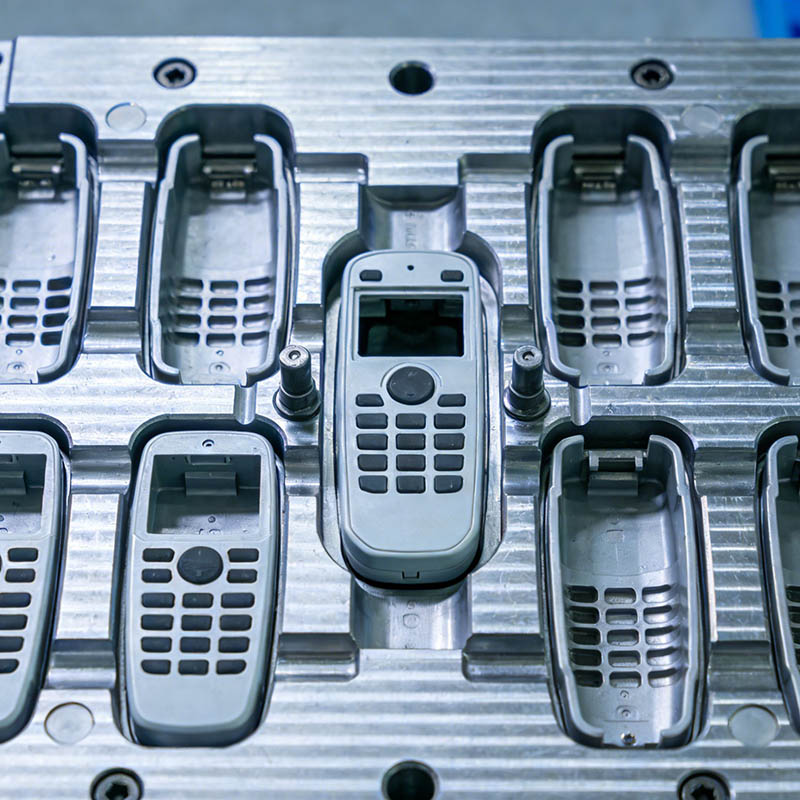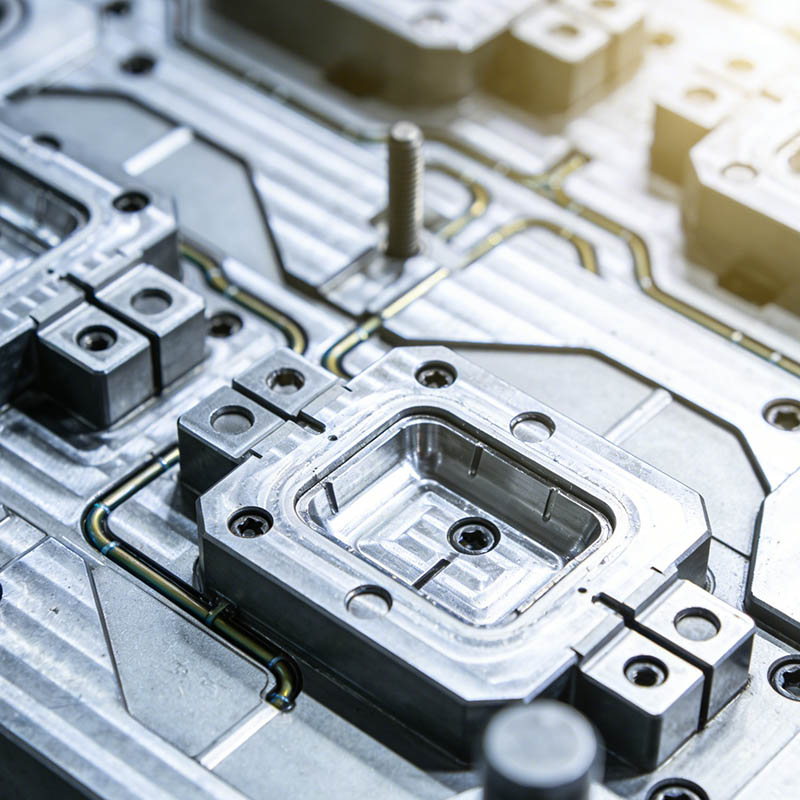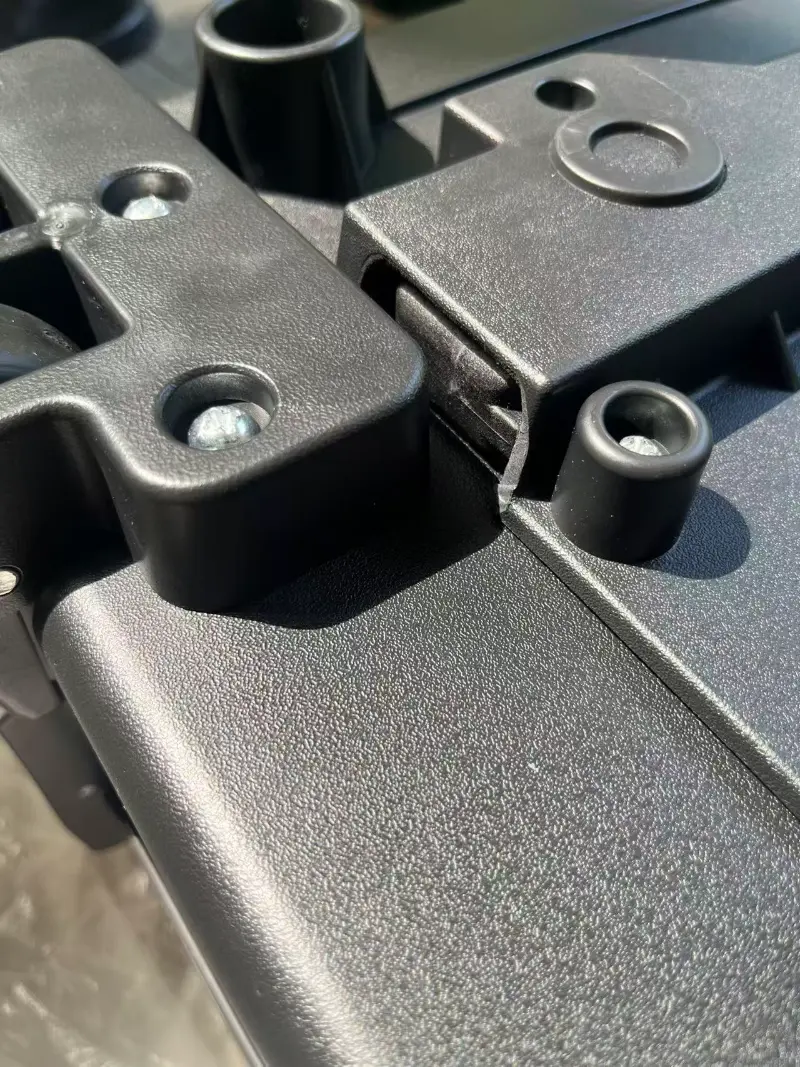

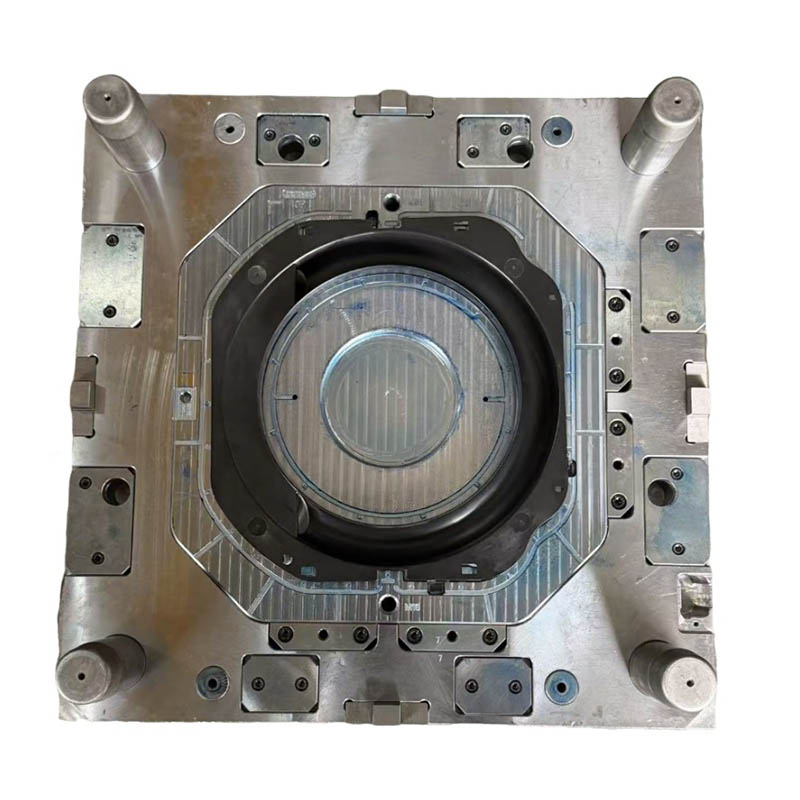
The Large Washing Machine Door Ring Injection Mold serves as the critical interface between the cabinet and glass door, directly impacting the appliance's leak prevention, noise reduction, and aesthetic appeal. It demands precise sealing lip formation, flawless surface finish, and error-free assembly with diverse cabinet types despite complex geometries.
Drawing from years of practical experience serving major appliance brands like Samsung, Haier, and Hisense, we deeply understand the core requirements for mass-producing door gaskets. We deliver not just molds, but a mature system honed for “stable mass production” and “cost control.” From the initial design phase, we employ tools like mold flow analysis to optimize fill balance and cooling uniformity, fundamentally preventing warpage and cosmetic defects to ensure molds withstand long-term production challenges.

Balanced Cooling System Ensuring Consistent Sealing Lip
Challenge: Uneven gate ring cross-section causes rapid cooling in thin-walled sealing lip areas versus slower cooling in thick-walled sections. This imbalance leads to product warping, sealing lip dimensional fluctuations, and compromised long-term sealing reliability.
Solution: Implemented zoned differential cooling design. Key functional areas like sealing lips and mounting slots feature independent, high-efficiency cooling circuits. This achieves overall thermal equilibrium, effectively controlling shrinkage and deformation to guarantee dimensional stability of sealing components across every molded part.
Comprehensive Venting Solution to Eliminate Surface Defects
Challenge: Complex gate ring geometry with large projected area prone to trapped air behind ribs or on curved surfaces, causing visible defects like scorching, glossiness, or short shots that result in scrap.
Solution: Implement a combined venting network featuring “parting line vents + insert vents + ejector pin vents.” Guided by mold flow analysis, precise venting is positioned at all melt ends to ensure smooth air evacuation from cavities. This fundamentally eliminates appearance defects caused by trapped air and improves first-pass yield.
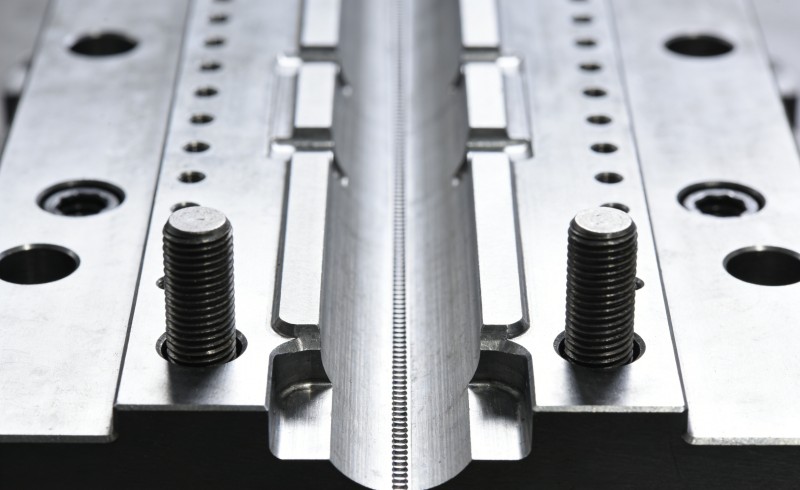
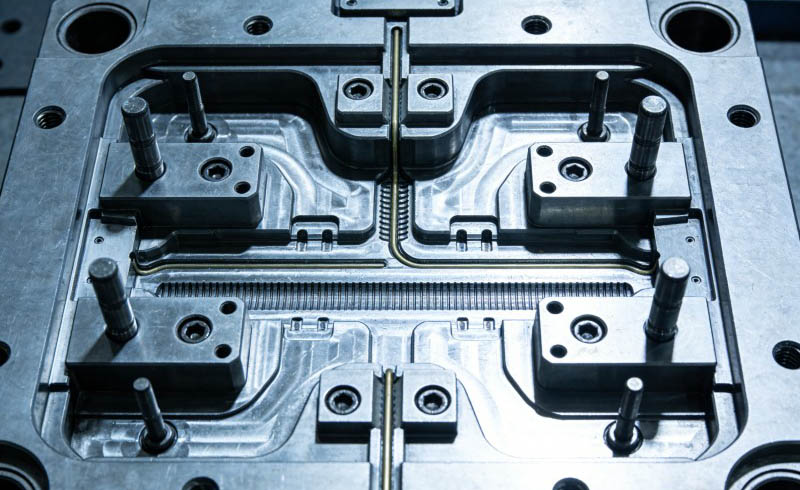
Challenge: Door rings often use soft rubber materials like TPE and feature multiple undercuts, making them prone to deformation, scratches, or tears during ejection.
Solution: Implemented a primary solution combining “gas-assisted ejection + large-area ejector blocks.” During mold opening, compressed air is first introduced to eliminate vacuum adhesion, followed by stable and balanced ejection force provided by large-area ejector blocks. For complex undercuts, proven solutions like inclined ejectors or internal pullers were employed to ensure smooth, damage-free part removal.
Challenge: As an exterior component, the door ring requires a uniformly smooth surface (high-gloss or fine matte finish) that withstands wear over hundreds of thousands of molding cycles, preventing scratches or drag marks that degrade gloss.
Solution: Cavities are fabricated from premium polished steel optimized for high-volume production. Customer-specified surface finishes are achieved through specialized polishing or etching processes. Moving components like slides and inclined ejectors undergo high-hardness treatment and precision fitting to prevent cavity scoring during prolonged operation, maintaining stable appearance quality.
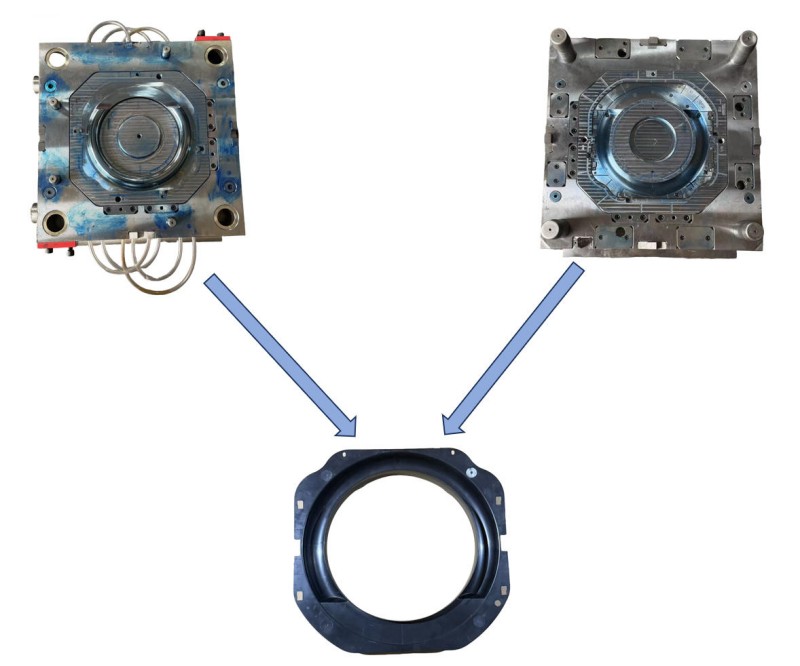
We provide end-to-end services from design to mass production delivery:
| Phase | Service Content | Deliverables |
| DFM Analysis | Analyze product manufacturability based on mass production experience, proposing design optimizations for stable production and cost reduction. | Detailed DFM Report including improvement proposals. |
| Mold Design | Conduct full 3D design and complete Moldflow analysis to validate and optimize filling, cooling, and deformation. | Complete set of 3D/2D design drawings for customer approval. |
| Precision Machining | Machine cavities and critical components using high-precision CNC, wire EDM, and mirror-finish spark erosion equipment | Real-time machining progress updates and critical dimension inspection reports. |
| Mold Trial & Debugging | Conduct mold trials on our in-house injection molding machines, debug to stable operation, and produce representative samples. | T1 samples and a comprehensive “Mold Trial Report” with complete process parameters. |
| Acceptance & Delivery | Organize pre-production trials to validate mold stability and product yield rates, completing final delivery. | Production-ready molds, Operation & Maintenance Manual, and process documentation. |
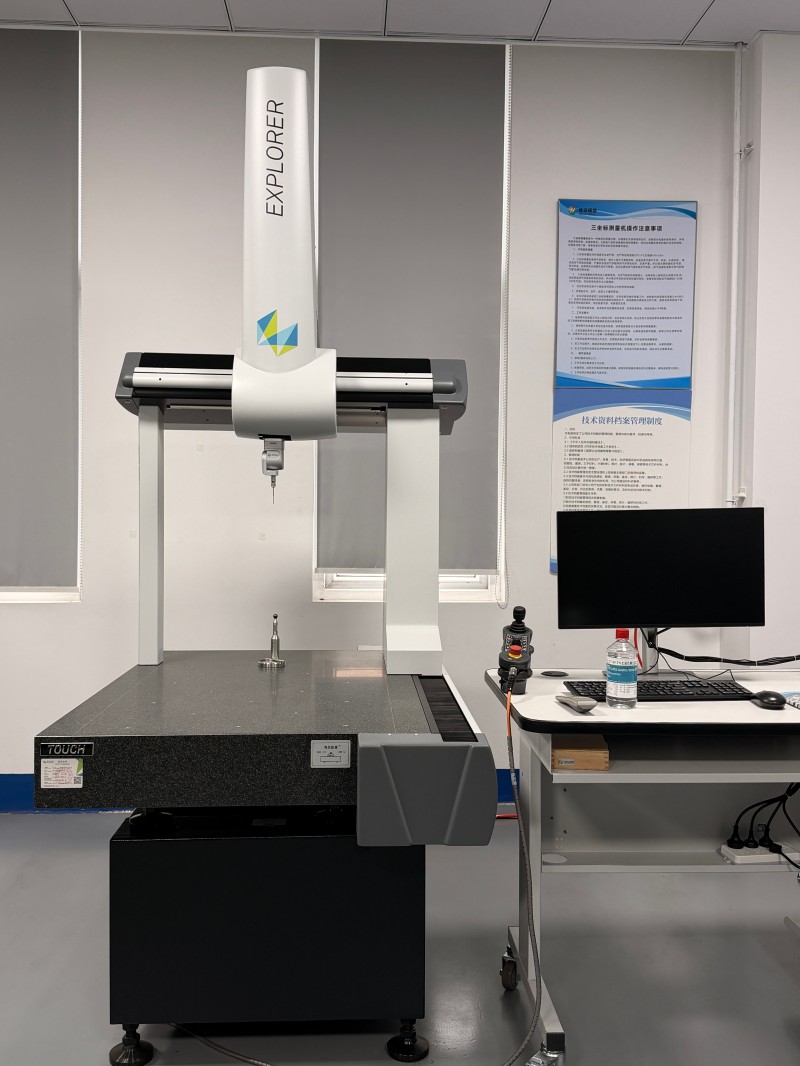
Quality Assurance: Before shipment, critical dimensions undergo CMM inspection and continuous stable production testing to ensure reliable mass production capability.
Q1: What is the typical development cycle for door frame molds like those used by Haier or Samsung?
A1: Based on established project experience, the standard cycle for a door frame mold designed for high-volume production—from design to T1 sample—is approximately 8–11 weeks. Specific timelines depend on cavity count, structural complexity, and surface finish requirements.
Q2: What is the mold's lifespan and maintenance cycle?
A2: Our design targets provide molds capable of stable production exceeding 300,000 cycles (for materials like PP, TPE). Through optimal steel selection, heat treatment, and protective designs for moving parts, molds maintain precision long-term with proper maintenance. We provide clear maintenance guidelines.
Q3: How do you ensure assembly compatibility between door rings and washing machine housings from different brands?
A3: Experience is key. We have developed numerous door ring molds and are familiar with mainstream housing fit standards. During development, we prioritize analyzing and validating all installation points, snap-fit dimensions, and seal lip tolerances. A T1 sample will be provided for actual machine assembly testing to confirm perfect matching.
Q4: How are design changes handled if required later in the product lifecycle?
A5: We understand the need for product iterations. Our change process is efficient and transparent:
You provide the change data → We assess technical implications and propose modification solutions with quotes → Upon confirmation, we implement changes and conduct re-molding verification. We possess extensive experience handling common design modifications.
Address
Building 6,300# Chuanghui Road,Zhongnan Hi-Tech Binhai Industrial Zoo, Ninghai, Ningbo, Zhejiang, China
Tel