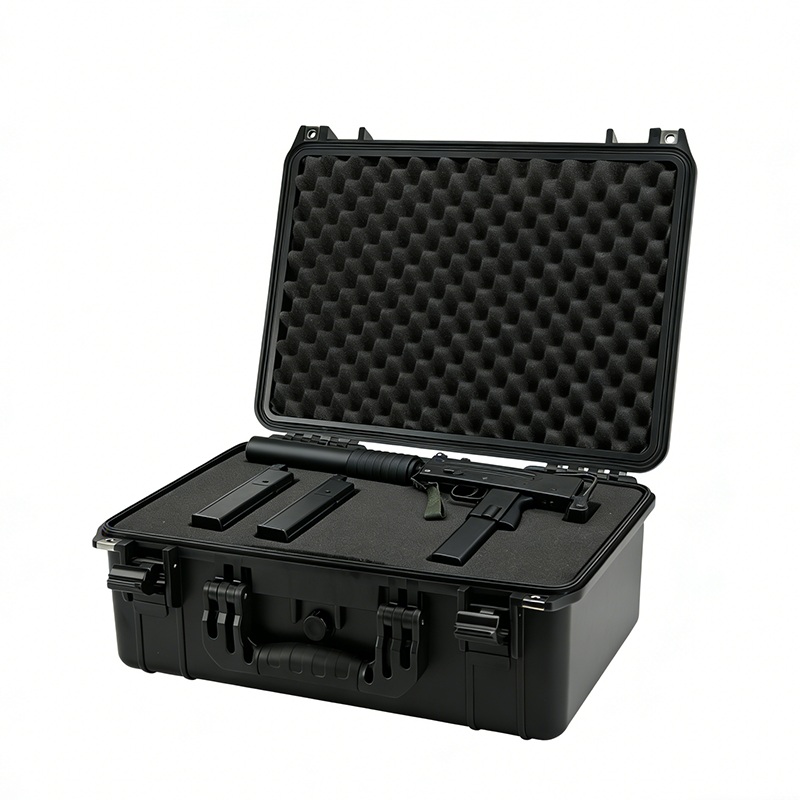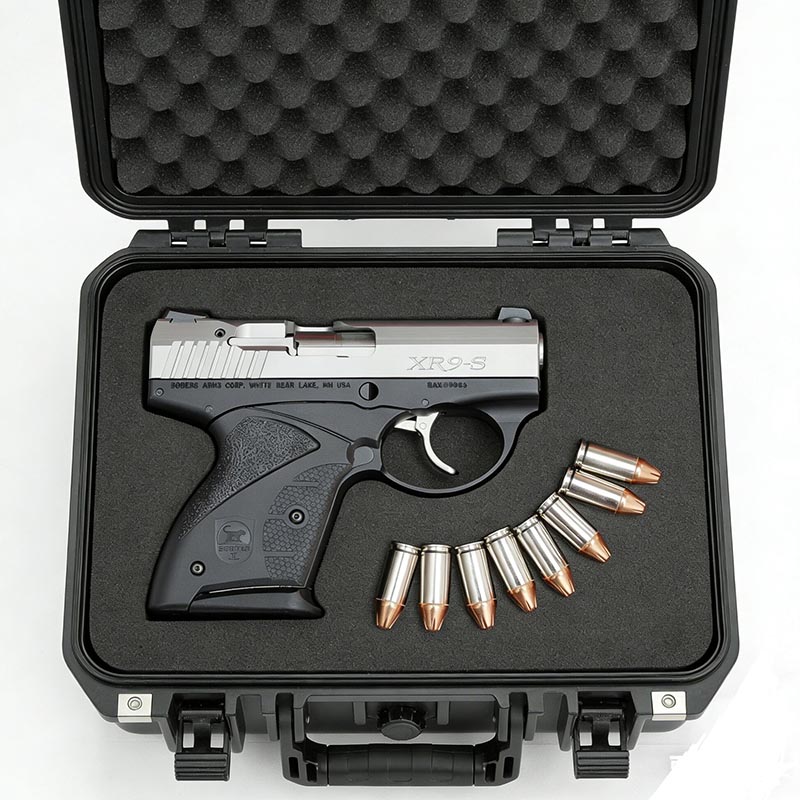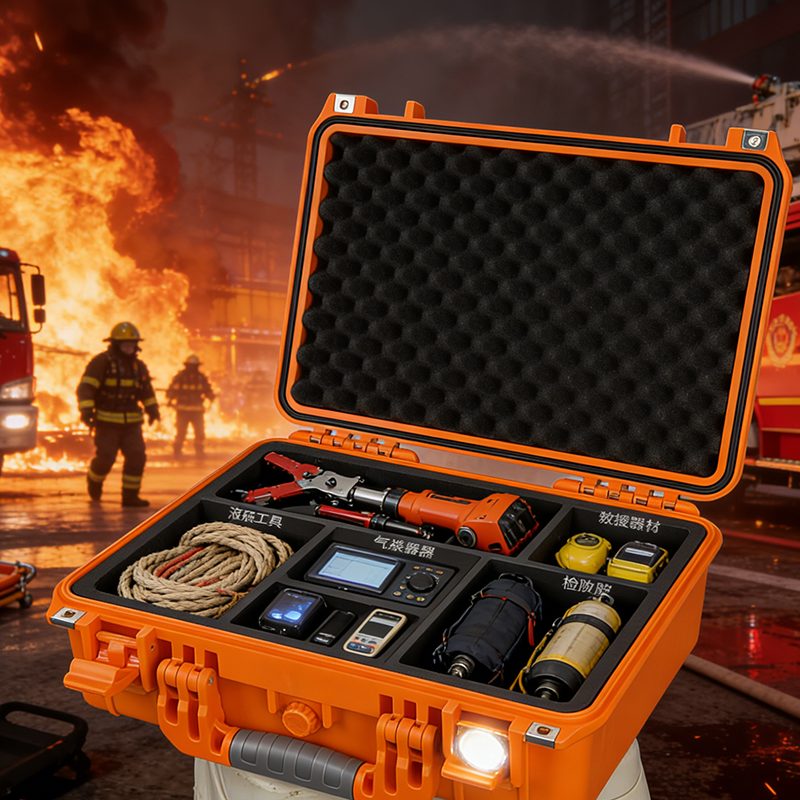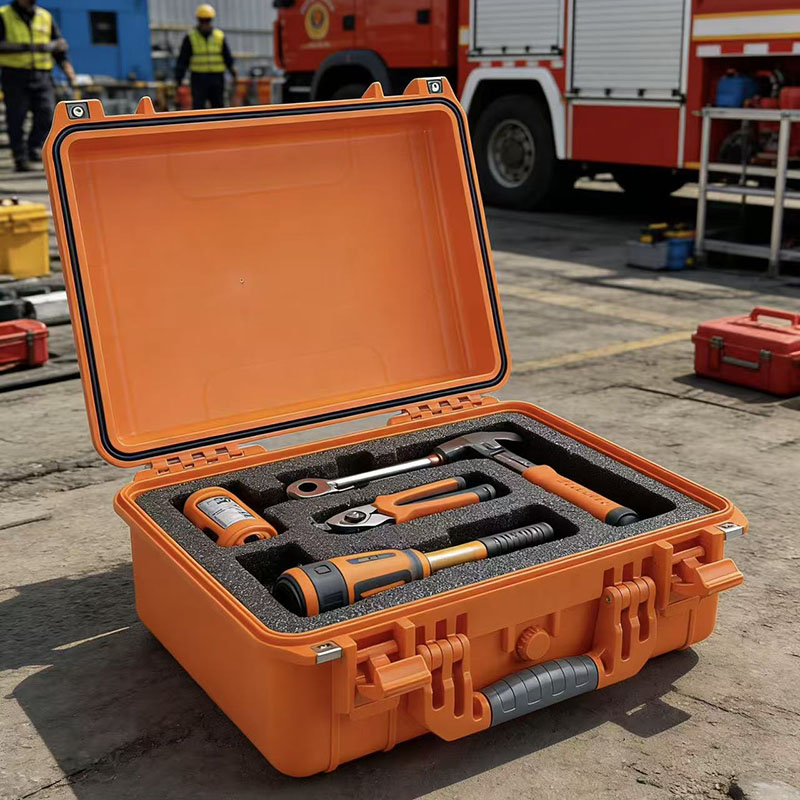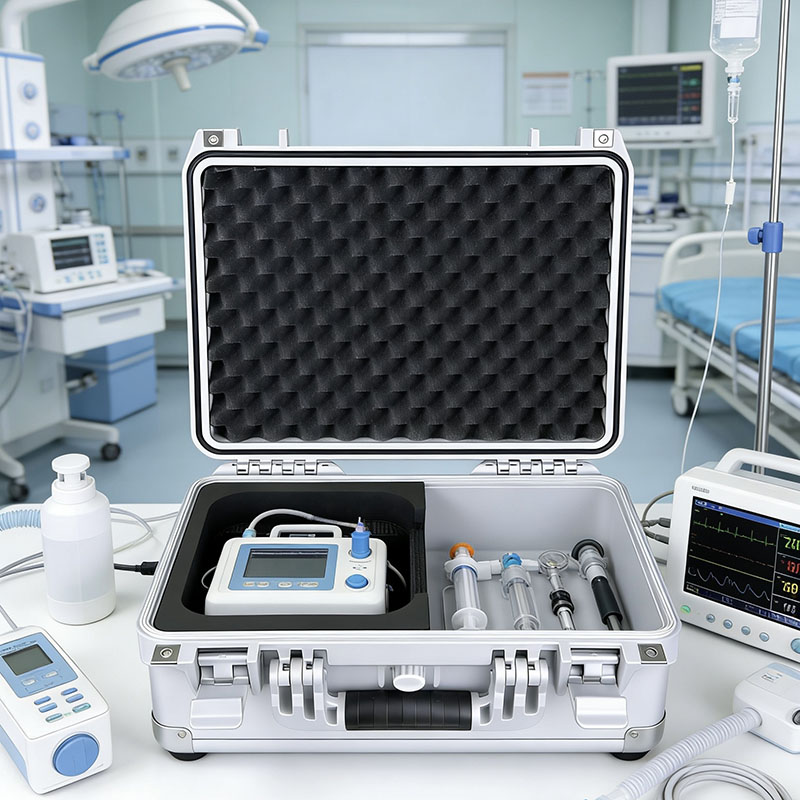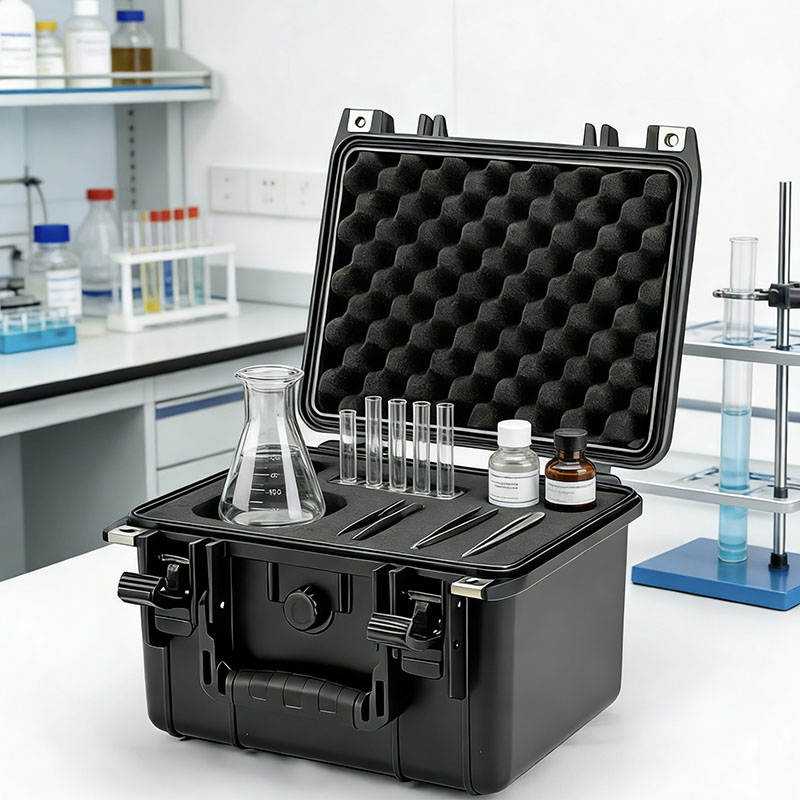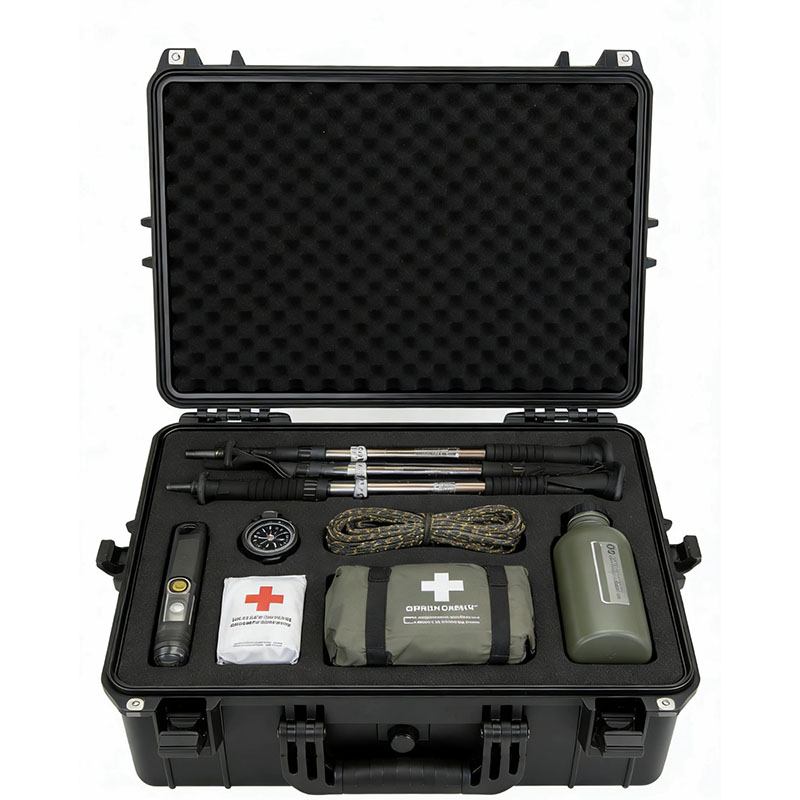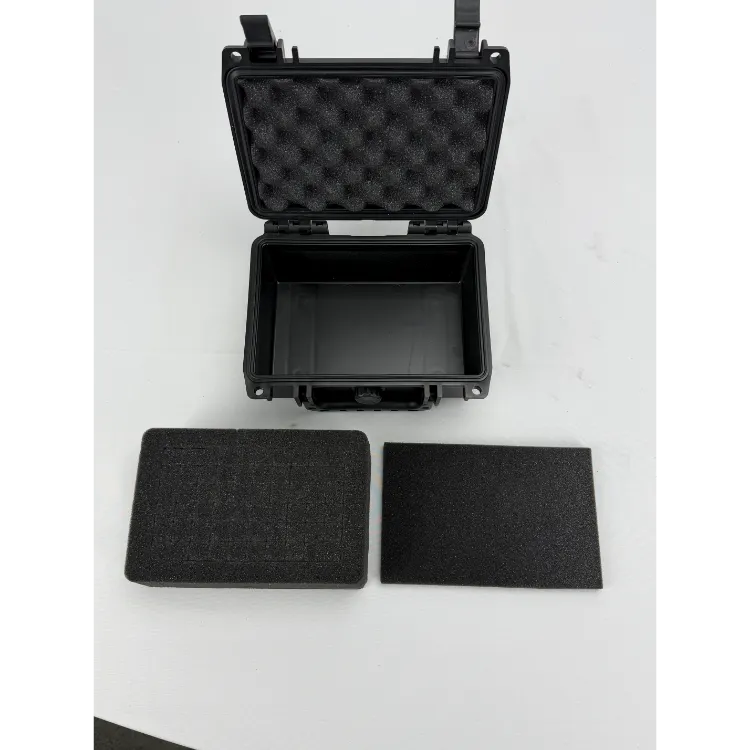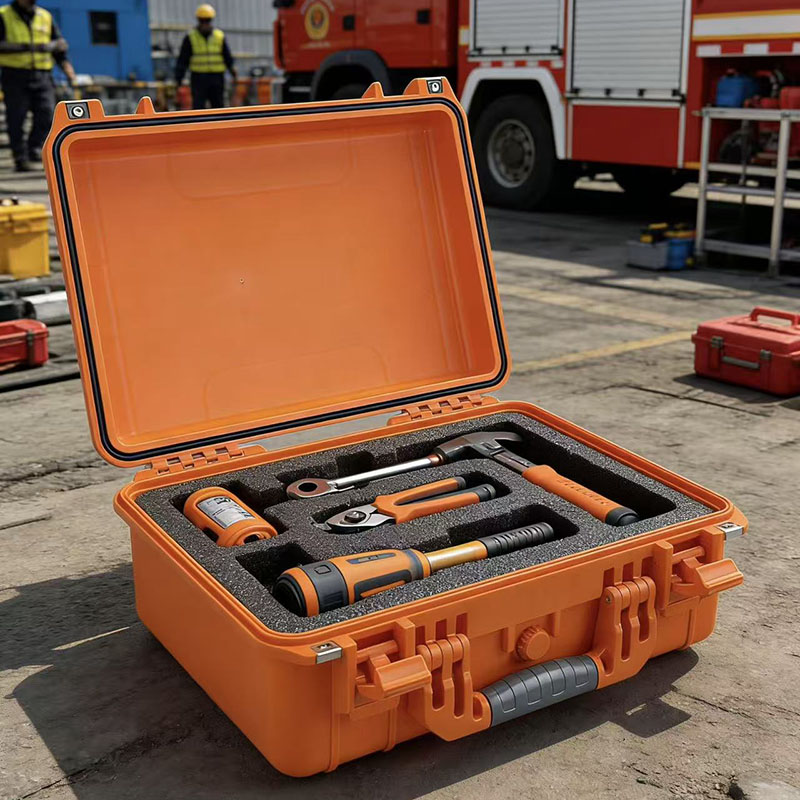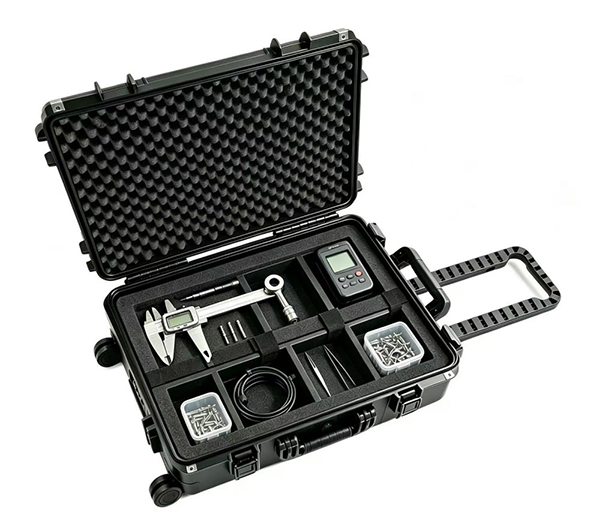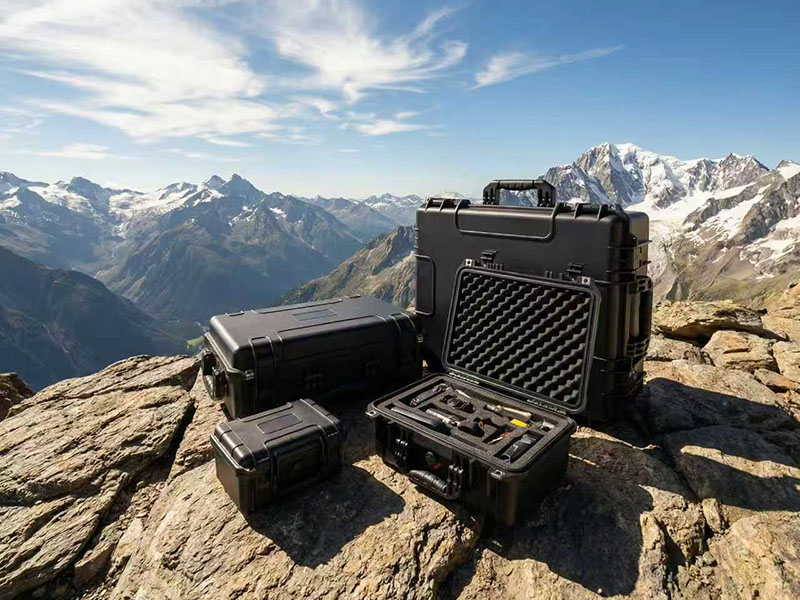



Precision instrument protective box combines a rugged case body with an internal cushioning structure designed around the contours of the equipment, allowing the main unit and accessories to be secured in their designated positions.As a manufacturer, WEISHUO can match suitable existing case models according to the instrument dimensions, accessory configuration, and actual use conditions, or provide further customization including foam inserts, EVA, case colours, logos, and OEM development.
Precision instruments do not always develop problems only after severe drops or impacts.
In actual projects, more common situations include:
Continuous vibration during vehicle transportation
Minor collisions between the main unit and accessories
Long-term pressure on probes or connectors
Accessories losing their fixed positions after repeated use
Exposure to dust, moisture, or rain when moving from indoor to outdoor environments
Components being mixed up or misplaced when the same equipment set is used by multiple people
Individually, these situations may not appear serious. However, for measuring, analytical, calibration, and testing equipment, repeated exposure over time may affect the condition of the equipment.
Therefore, a Precision instrument protective box should solve more than the question of whether the equipment can simply fit inside.
What matters more is whether the equipment remains stable during transportation and whether every component can be quickly returned to its correct position after use.
WEISHUO's Precision instrument protective box is designed around these transportation risks. The following sections explain how to select a suitable solution to reduce such risks.
A precision instrument project usually involves more than just one main unit.
Many equipment sets also include:
For this type of project, we generally recommend:
Determine the complete equipment configuration first, and then design the internal layout.
This is more practical than first choosing a case that only looks similar in size and then filling the remaining space with foam.
For OEM projects, customers can provide:
Equipment photos, dimensions, CAD drawings, or physical samples.
Based on this information, WEISHUO can further discuss suitable case models and internal layouts.


Thicker foam does not automatically mean better protection.
The key issue is whether the equipment still has room to move during transportation.
If the gap between the equipment and the foam is too large, vibration from vehicle transportation may still cause the equipment to move repeatedly.
If the cutout is too tight, removing the equipment may become inconvenient.
A reasonable internal solution should therefore maintain a balance between:
Fixation, cushioning, and accessibility.
For complete equipment sets, we normally recommend:
A clearly defined position for the main unit
Clearly separated accessory areas
Easy return of each item to its original position after use
This is also one of the key differences between custom foam and a standard empty case or general-purpose toolbox.
Different internal materials can be selected according to the project.
Suitable when equipment dimensions may vary, for smaller projects, or when customers prefer to adjust the internal space themselves.
Can be cut according to the shape of the equipment to create fixed positions, making it more suitable for instruments with confirmed dimensions and models.
Provides a cleaner and more uniform surface, suitable for equipment sets, branded instruments, and projects with higher presentation requirements.

Precision instruments may initially be used in a clean laboratory, but real-world projects do not always remain in ideal environments.
They may be taken to:
Production workshops
Equipment maintenance areas
Outdoor surveying sites
Construction sites
Environmental monitoring areas
In these situations, transportation is not the only concern.
The case may also encounter:
Dust
Sand and dirt
Water splashes
Humid environments
Frequent opening and closing
Uneven or complex ground conditions
The Precision instrument protective box has IP67 test documentation.
For applicable products and under specified test conditions, this provides reference protection against dust ingress and temporary water immersion.
It should be noted that:
IP67 does not mean that the case can be used underwater for an unlimited period under all conditions.
If a project involves long-term immersion, special pressure conditions, or other extreme environments, the application should be evaluated separately.
In addition to sealing and cushioning, customers may also be concerned about the condition of the case under temperature and pressure changes.
The Precision instrument protective box comes standard with a manual pressure relief valve and has undergone high- and low-temperature testing from -40°C to 80°C.
At present, WEISHUO also has related SGS testing/compliance documentation including:
IP67, RoHS, REACH SVHC, TSCA, and California Proposition 65.
Specific documents can be provided for confirmation according to the applicable product model and project requirements.


A dimensional specification can only show whether the equipment can theoretically fit inside the case.
After the foam design has been completed, the actual user experience still needs to be checked.
For example:
Is the equipment easy to remove?
Is there enough space for fingers to grip the equipment?
Are the probes under excessive pressure?
Can the test leads be returned easily?
When the lid is closed, does the lid foam apply a suitable amount of pressure?
Will the equipment move during transportation?
For projects with higher equipment-fit requirements, we therefore recommend confirming a sample first.
A typical project can proceed in the following sequence:
Equipment information → Case model confirmation → Internal layout → Sample production → Actual equipment fitting → Mass production
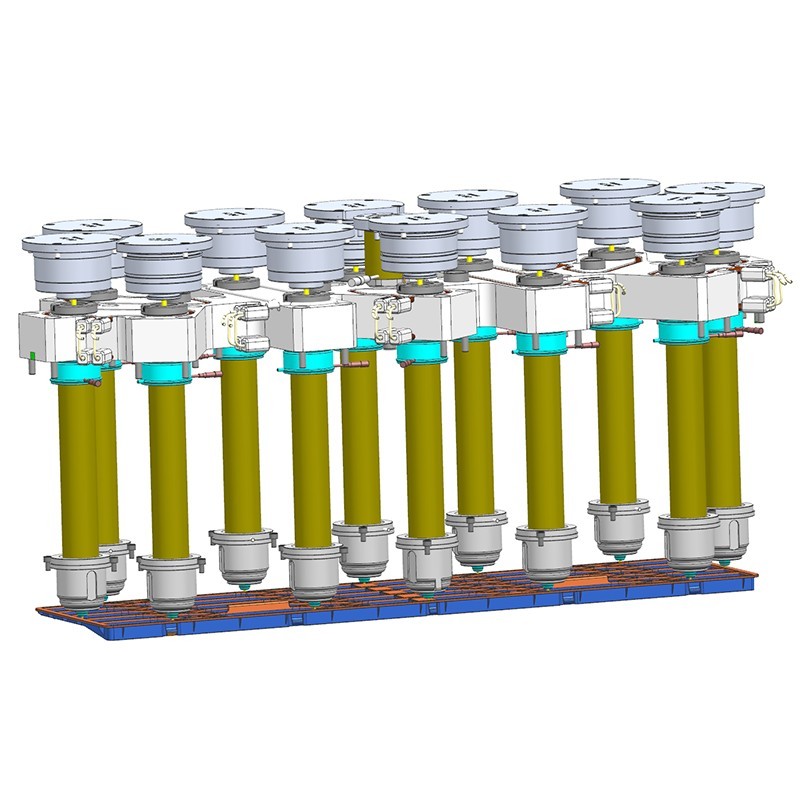
WEISHUO does not simply purchase finished cases and resell them.The company started with mould design and injection moulding and has accumulated manufacturing experience in precision automotive moulds.
Our factory currently supports the following process:
Mould development → Injection moulding → Product inspection → Internal solution → Mass production
We are also equipped with Coordinate Measuring Machines (CMMs) and 2D vision measuring equipment for dimensional inspection of moulds and finished products.For ordinary standard protective boxes, these capabilities may not always be immediately visible.
However, when a customer's project involves:Dimensions, structure, foam, colours, mould development, or long-term volume purchasing,these manufacturing capabilities allow both sides to continue the discussion from a practical product and manufacturing perspective.


Q1: Can the internal foam be designed according to our precision instruments?
Yes. Customers can provide equipment photos, dimensions, CAD drawings, or physical samples. We can discuss a suitable internal solution based on the layout of the equipment and accessories.
Q2: Can the foam cutouts match the exact shape of the equipment?
Yes. Custom cutting can be carried out according to fixed equipment models, so that the main unit and accessories can each be placed in their corresponding cutouts.
The actual clearance and access areas will be evaluated according to the equipment itself.
Q3: We have many accessories. Can they be stored in separate sections?
Yes. Probes, cables, batteries, power adapters, and calibration accessories can all be planned into separate areas according to the available internal space.
Q4: Does the protective box have IP67 test documentation?
Yes. WEISHUO has SGS IP67 test documentation.
The applicable model and test conditions should be confirmed according to the specific project.
Q5: Can the case colour and logo be customized?
Yes. Depending on the project, we can discuss options including:
Case colour, silk-screen logo, sticker label, hanging tag, and other branding solutions.
Q6: Can we make a sample first?
Yes. For precision instrument projects, we recommend confirming the sample and actual equipment fitting first before proceeding with mass production.
Address
Building 6,300# Chuanghui Road,Zhongnan Hi-Tech Binhai Industrial Zoo, Ninghai, Ningbo, Zhejiang, China
Tel